From Trusted Successor to Owner: Dr. Velez’s Path Into an Existing VPP Hospital
The second in a series on VPP’s three pathways to partnership, told through the doctors who’ve walked them.
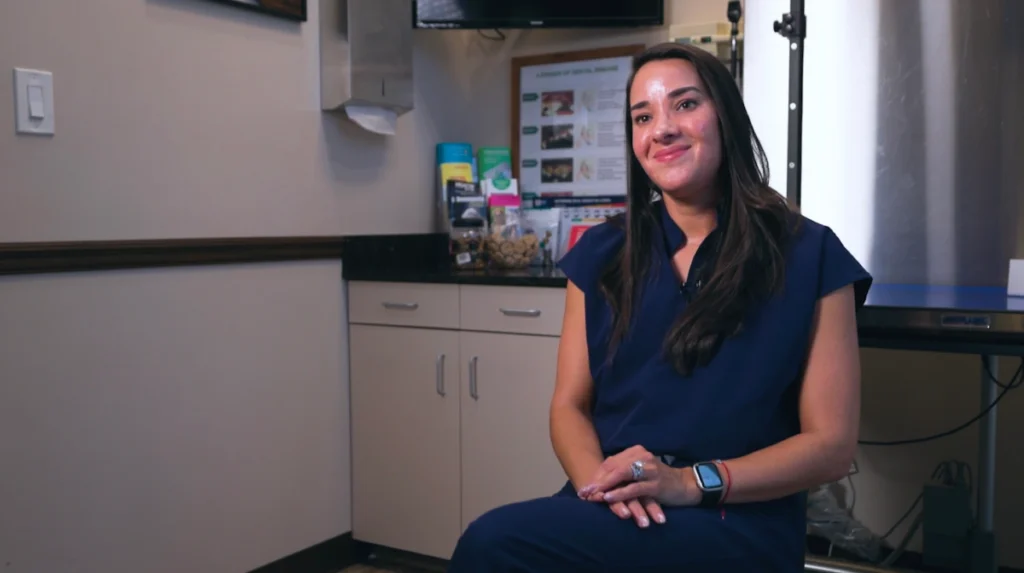
Dr. Arlianne Velez, veterinarian and owner, Parkland Animal Clinic.
Every veterinarian who dreams of ownership eventually runs into the same question: How? At Veterinary Practice Partners, we’ve built three distinct pathways to get doctors there. Some want to build a hospital from the ground up. Others want to buy an existing practice with a partner alongside them from day one. And some, like Dr. Velez, step into co-ownership by buying into a VPP hospital that’s already up and running with an established team and client base. Each path looks different, but they all lead to the same thing: real equity, real autonomy, and a hospital that stays true to the doctor who leads it.
Build a De Novo
Design and build a new hospital from the ground up, with full VPP support from site selection to opening day.
Buy Into an Existing VPP Hospital
Step into a running hospital with an established team and client base, as a co-owner from day one.
Dr. Velez’s PathPartner to Buy a Hospital Together
VPP finds a practice for sale and co-owns it with you, often from a retiring owner.
What It Means to Buy Into an Existing VPP Hospital
Of the three pathways, this one is built for doctors who are ready to own now and don’t want to spend years building a client base from scratch. Instead of breaking ground on a new location, you step into a VPP hospital that’s already established, often one where a founding partner is approaching retirement and looking for the right person to carry the practice forward.
You’re buying into the selling price of a real, functioning hospital, not underwriting new construction. The timeline moves faster too, usually nine to twelve months from first conversation to ownership, compared to twelve to eighteen months for a De Novo build. In exchange for that speed, you inherit something you can’t build overnight: a loyal client base, a trained staff, and a hospital with a reputation already earned in its community. It’s a faster route to profit sharing than starting new, and for doctors who value stability as much as ownership, it’s often the better fit.
Source: Dr. Velez interview.
Dr. Velez’s Story
A familiar warning sign. For over six years, Dr. Arlianne Velez was the medical director at a private practice that was eventually acquired by a corporate group. Watching that transition up close got her wondering whether she could run a hospital on her own. At the time there was no ownership opportunity in front of her, so she started doing research instead.
Starting down the De Novo road. That research pointed her toward building a hospital from scratch. Along the way she learned VPP also had a path into already-established practices, not just new builds.
The right opportunity, in her own community. Parkland Animal Clinic became available because its longtime owner was ready to retire, and the timing lined up with where Dr. Velez already lived. For him, the priority was finding someone he could trust to carry forward the clients and patients he’d cared for over the years. For her, it was a chance to serve the community she was already part of. He officially retired in May 2025, and by December of that year, Dr. Velez had signed on as the practice’s new owner.
Weighing the real lifestyle math. Before committing, Dr. Velez ran the numbers on what each path would actually look like day-to-day. A De Novo build without an associate yet on staff would likely mean working five or six days straight to cover the hours clients need most, weekends included. Buying into an established, already-staffed hospital meant stepping into a business that was already running, with room for every doctor on the team, not just her, to have a real work-life balance. With a young family at home, that mattered.
“It could be scary at the beginning to think about the idea of ownership. But that’s what VPP brought to me, to feel comfortable enough to take that step and to feel like I’m not going to be alone in this situation. I have a partner that supports me. I still get to be an owner.”
What corporate ownership actually looked like. Dr. Velez had already seen what happens when a private practice gets absorbed into a corporate group: shifts in culture and morale that nobody fully agreed to, changes to staffing and scheduling, and pressure on the quality of care. None of it was necessarily intentional, but once corporate ownership takes over, she says, those changes tend to follow.
“We don’t feel like VPP is telling us how to practice medicine or how to manage our staff.”
A collaborative partner, by design. Dr. Velez describes VPP’s presence in her day-to-day as quiet by design. The support is there when she needs it, for finance, HR, and the administrative work she’d otherwise be stuck doing herself, but the culture and medical decisions stay hers to set.
“We have the freedom to practice and run the hospital how we want to, as long as, of course, we’re all in agreement.”
Looking at the profession more broadly, Dr. Velez sees real stakes in how ownership gets structured going forward.
“If every veterinary hospital becomes just one corporate, no matter what the name of that corporate is, we lose the autonomy. We become more robotic. We become a number.”
For her, VPP’s model threads that needle: real medical autonomy paired with real support, so the business side never has to come at the expense of the medicine or the team.
“VPP offers what I think is the best of both worlds, where you practice your medicine but also have that support. That alone is amazing, because it gives you that security of looking into the future, that you’re not alone.”
Every doctor’s situation is different. That’s the point.
Dr. Velez’s story is one version of what buying into an existing VPP hospital can look like. VPP builds a plan around where you are, not the other way around.
Start the ConversationVeterinary Practice Partners · Pathways to Partnership Series